
Language discrimination doesn’t always look dramatic.
It rarely announces itself.
It doesn’t always sound hostile.
And it often hides behind politeness.
In everyday life, language discrimination shows up through small comments, expectations, and decisions that shape who is taken seriously — and who is not.
Below are common examples of language discrimination in everyday life, many of which people experience without ever having a name for them.
1. Being Complimented for Speaking English Well

“You speak English so well.”
“Your English is great.”
These statements are often framed as compliments, but they carry assumptions:
- That fluency was unexpected
- That English is not your natural language
- That you are an exception
This is one of the most common examples of linguistic discrimination, because native speakers are never praised for the same thing. Fluency is assumed for some — and celebrated for others.
2. Accent Bias in the Workplace
Accent bias is a well-documented form of language discrimination.
Examples include:
- Being passed over for promotions because you “don’t sound confident”
- Being told to “soften” or “neutralize” your accent
- Being interrupted or talked over in meetings
- Being assigned less visible roles because of how you speak
These are not performance issues.
They are accent bias examples rooted in perception, not ability.
3. Being Asked Where You’re “Really” From

Questions like:
- “Where are you really from?”
- “Is English your first language?”
- “What’s your original language?”
can feel invasive when they follow immediately after hearing someone speak.
These questions often signal that a person’s way of speaking has marked them as an outsider — even if they were born and raised in the same place as everyone else.
4. Language Policing in Schools
In schools, language discrimination often shows up early.
Common examples include:
- Penalizing students for accents rather than clarity
- Discouraging bilingual students from using their home language
- Treating non-standard grammar as lack of intelligence
- Placing students in lower tracks based on speech patterns
These practices reinforce language inequality and shape confidence long before adulthood.
5. Media Representation and “Neutral” Voices

In media and broadcasting, certain accents are labeled as “neutral,” “clear,” or “professional.”
Others are described as:
- Distracting
- Heavy
- Hard to understand
This reinforces the idea that some voices are more trustworthy than others — a powerful form of everyday language discrimination with wide cultural impact.
6. Customer Service and Public Interactions
Language discrimination often appears in everyday interactions:
- Speaking slowly or loudly to someone who already understands
- Switching to simplified language unnecessarily
- Asking someone else to repeat what a person just said
- Assuming misunderstanding based on accent alone
These moments communicate doubt, not respect.
7. Code-Switching as Survival
Many bilingual people respond to language discrimination by code-switching — adjusting speech, tone, or vocabulary depending on the setting.
While often framed as a skill, constant code-switching can be emotionally exhausting. It reflects awareness that certain versions of oneself are more acceptable than others.
This is not choice alone.
It’s adaptation.
Why Language Discrimination Often Goes Unnoticed
Language discrimination is normalized because it is subtle.
It hides behind:
- Compliments
- Curiosity
- Professional standards
- “Clear communication” expectations
But subtle does not mean harmless.
Over time, these moments shape confidence, opportunity, and belonging.
Naming the Pattern Is the First Step
Understanding examples of language discrimination helps people recognize patterns — not just isolated moments.
Once named, these experiences become easier to challenge, discuss, and change.
Because language should never determine worth.
And how someone sounds should never decide how seriously they are taken.
About the Author
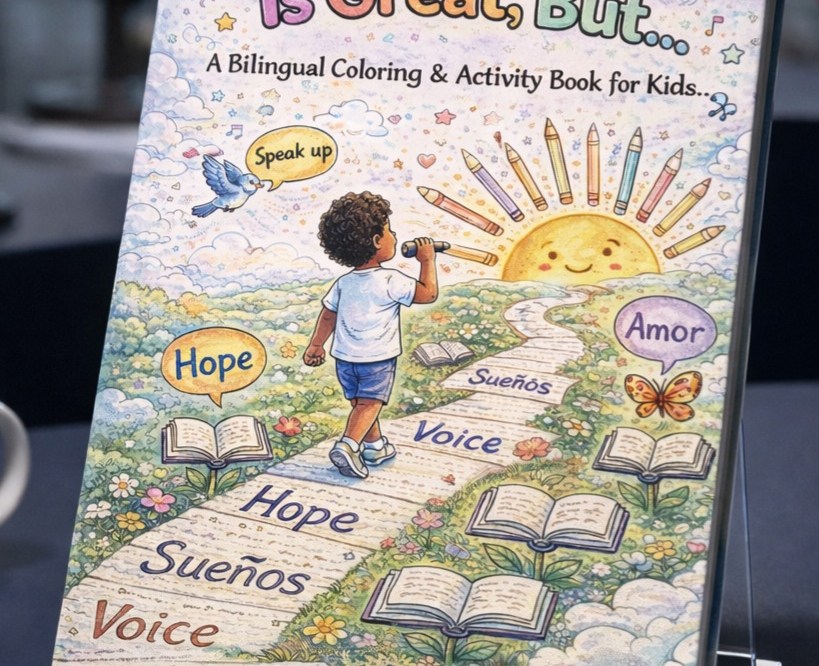
José Martínez is a journalist and author who writes about language, identity, and belonging. He is the author of Your English Is Great, But…, a book exploring accent bias, bilingual identity, and the hidden meaning behind everyday compliments.
👉 Your English Is Great, But… is available now on Amazon:
https://www.amazon.com/Your-English-Great-But-Languages/dp/B0FHBJKJ6R
Posts



















Discover more from José Martínez
Subscribe to get the latest posts sent to your email.

